Solutions — HydrosIQ · DeepIQ · RooTIQ
Three industrial applications
One source nanobubble technology, engineered for three industries: lakes and rivers, onshore aquaculture, and agricultural root zones. Measured results for each, on one page.
HydrosIQ
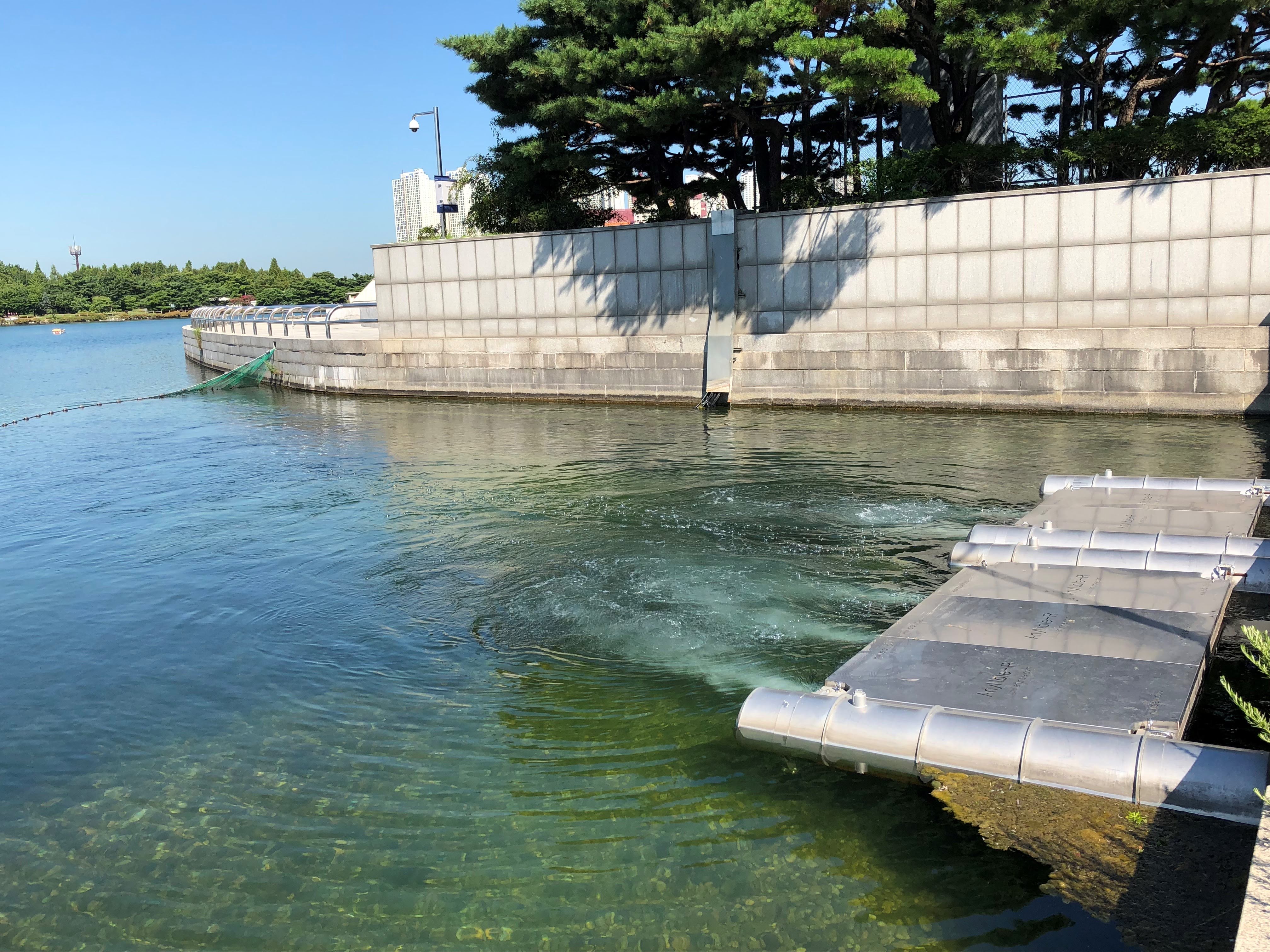
Algae blooms and odour complaints, solved at the source
No chemicals — water and air only. Ultrafine bubbles carry oxygen down to the sediment layer to restore self-purification, while underwater plasma decomposes algae directly. Running stably at more than 20 sites including Goyang Ilsan Lake Park, Songdo Central Park and Jeju Ojo-ri.
DeepIQ
Structurally lowers mortality risk in the high-temperature season
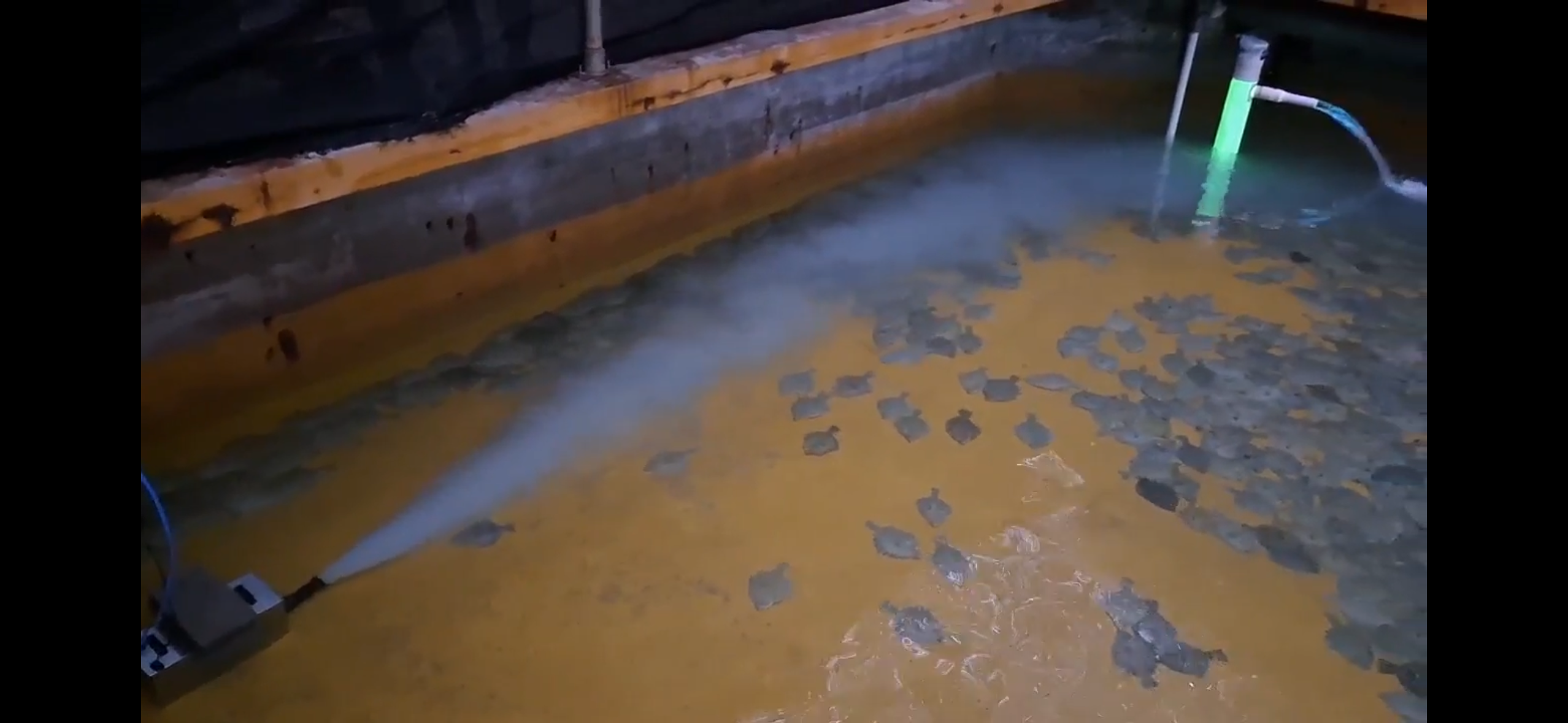
Nanobubbles deliver oxygen all the way to the tank floor, improving dissolved oxygen, turbidity and survival rate at once. Validated at olive-flounder farms in Jeju and Wando — operators notice the change in fish behaviour before the numbers move.
High-temperature mortality is not about adding oxygen.
It is about holding it in the water.
For every 1°C rise, the oxygen water can hold falls by 1.6%. But the oxygen flounder consume rises by 8%. Demand grows five times faster than supply declines.
From 28°C to 32°C the gap widens 1.46-fold. No matter how much oxygen is injected, coarse bubbles cross 0.8 m of depth in seconds and escape to the air. What keeps fish alive is not the amount added — it is the amount that stays.
15 minutes to the danger threshold
Tell us your site conditions and we will size the system for you. Tank dimensions, biomass, and peak summer water temperature are enough.
Contact usOxygen solubility — Weiss (1970) seawater equation, salinity 33 psu. Oxygen demand — a conservative Q10 of 2.2 was applied, within the standard range for fish metabolism. Measured studies report a steeper rise: olive flounder held at 29°C for four days averaged 317.5 mg O₂·kg⁻¹·h⁻¹ against 116.7 at 20°C (Fisheries and Aquatic Sciences). Buffer time is calculated from standard tank specifications and varies with stocking density and organic load.
RooTIQ
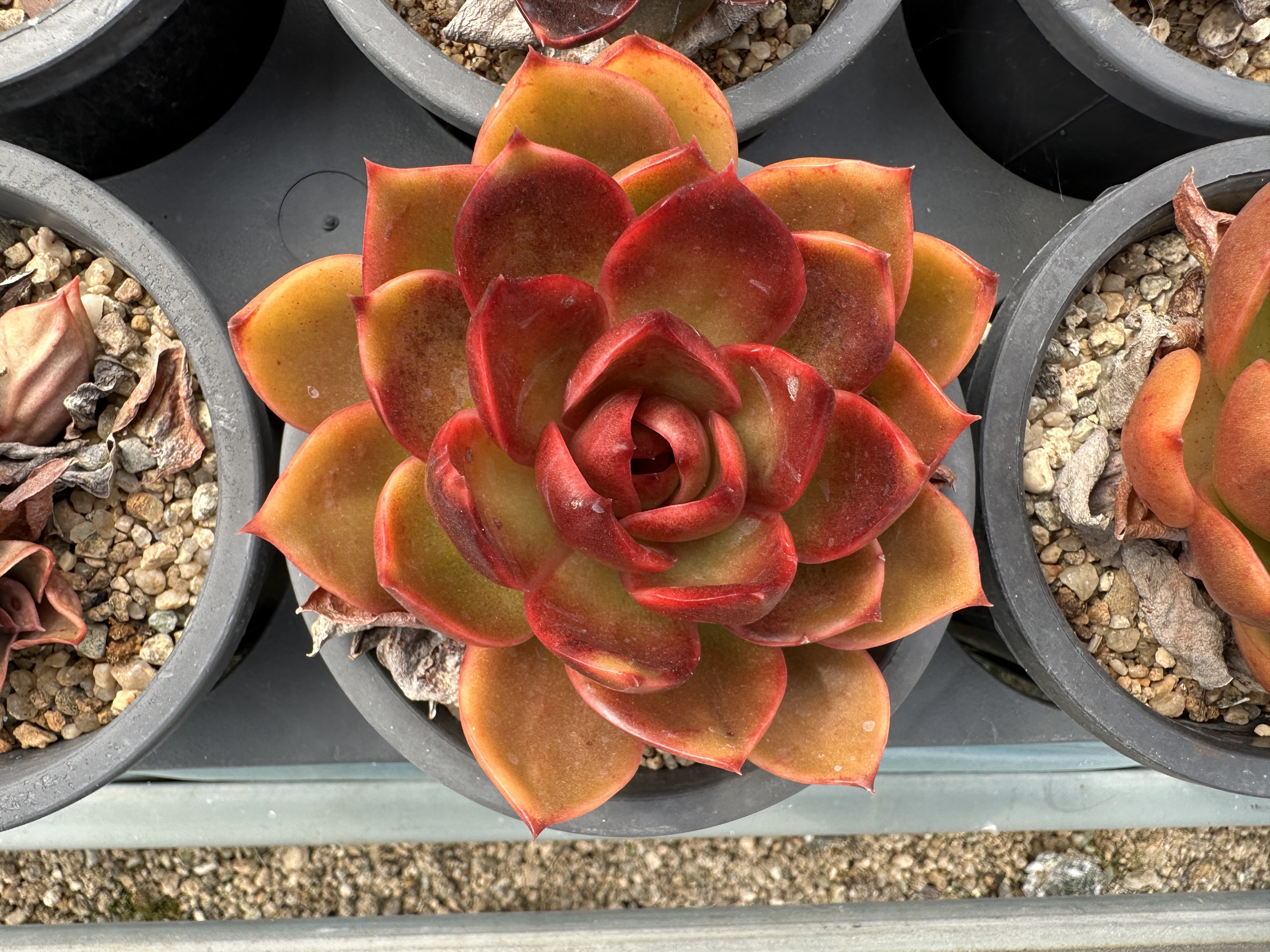
Manage below ground, not above
High-concentration oxygen is nano-bubbled into irrigation water and delivered straight to the roots. Fine roots proliferate, nutrient uptake rises, soil porosity improves, and the aerobic environment suppresses pathogens. The root principle does not depend on the crop.